ZQ, ZQRX and the case for ethical wool
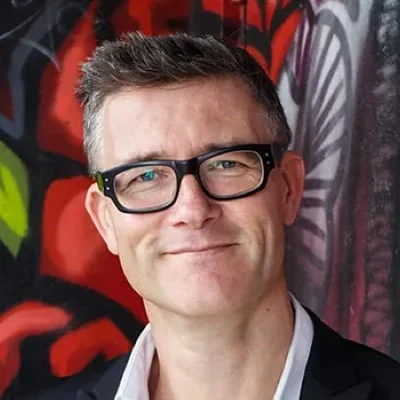
Nicola Peddie, The New Zealand Merino Company

Nicola Peddie tells how New Zealand Merino left the commodity wool market behind with ZQ and ZQRX, and the chance Australian growers have to do the same.
A story of transformational change
Well, thank you everyone for having me here today. Josh asked us to answer the question: what do we want you to take away from the presentation today? From our perspective, we want you to think about the opportunity that Australian woolgrowers have for their own story of transformational change. So please think about that as we go through the presentation. I'm joined here today by my colleagues Steve Wainwright, our Australian regional manager, who started at the beginning of this year, which is very exciting because we're growing, and also Emma Subtil, who came over last year.
Everything that we do as a business is centred around people, and when I come to Mumblebone I'd say that's the one thing that really shines through to me. I've been lucky enough, through getting to know Chad and Lou and spending time in their home and with their family, to see how they treat their workers. I see the genuine connections they have with their clients and their people. This is exactly the type of behaviour that we have towards our brands, to our growers and also internally as a team, and it's what makes us strong today.
Like I said, growers have a huge opportunity here in Australia. As we talk through this, I'll talk a bit about New Zealand's journey of transformational change, so think about what the Australian story of transformational change could be.
Where did New Zealand Merino come from? It came from an environment that was a perfect storm for the fine wool industry. It was based on commodity, the commodity market and auction. It's interesting: I read a figure that in Australia, 1.5 million bales of wool still go through auction. So again, think about that in terms of an opportunity for Australian growers to actually know who you're connected to. What my predecessors wanted to do was break away from this auction cycle and actually produce wool that they know the market wants.
The original, or traditional, model is very linear, and this is still what it is today from an Australian perspective. You have the producer at one end and the end user at the other, and there's no communication through that chain. It's very one way. What we had to work out was how to move from a volume model into what we call a value model. How do we drive genuine connection with our end consumer? The key to this is putting the end user at the centre of absolutely everything we do, which is a bit of what Howard was talking about this morning, this idea of human-centred design.
From non-mulesed to certified
If we're going to produce something, we need to know what market we're delivering into. With that, we talk about mulesing in Australia. I've been lucky enough in my role with The New Zealand Merino Company over the last five years to travel across Australia and talk to many different growers. The question of whether you should be non-mulesed from a market perspective isn't even a question anymore. It's an absolute expectation. And then, if you're non-mulesed, why aren't you certified? From a certification perspective, even that environment is crowded now. So how do we take that to another whole level? We'll talk about that in a minute.
What we saw when we put the end user at the core of everything we were doing as a business, back when we started, was this ethical consumer coming over the horizon. We thought to ourselves, what is the opportunity with that? How can we really hone that and make the biggest opportunity for our growers out of it? We launched ZQ, our ethical wool standard, in 2007. That's how it was born, based around the mulesing conversation. We saw that it was going to be a threat, and we thought, how can we make this an opportunity?
ZQ is an audited standard. For any of you that don't know, a quick review: it's a three-year audited standard, and it covers animal welfare, environment and also people. So again, what is the opportunity? Through that, we saw the creation of the active outdoor category, which was previously dominated by synthetics. This is where Icebreaker absolutely pioneered that space, and obviously we've got Margot talking after us. SmartWool was also absolutely key in that journey. Where are we today? ZQ represents the best growers in the world and the best brands in the world.
And with that, we have over 120 brand partners that we source wool into. When you get that many brand partners, the challenge for the likes of Icebreaker and SmartWool is how they actually differentiate. It's one thing to build a category, and we've done that incredibly, but they have to be able to stay ahead of their competitors. How do they do that? Now more than ever, what's absolutely key is having narrow and deep relationships, building a strong community, the power of stories, and being able to keep it simple.
That last bit, keeping it simple, is one of the hardest things to achieve. Look how complex a farming system is. So how do we distil that down into something that's really succinct and easy to communicate, for the likes of Icebreaker and SmartWool to be able to really connect with the end consumer? There are more and more external pressures coming on growers, and not just growers but other industries worldwide. The writing on this slide is very small, so hopefully you've got your glasses on: politically, economically, socially and technologically there's this expectation of hyper-transparency. Transparency isn't enough; we want hyper-transparency.
Moving away from the commodity market
Environmentally and also legally, everything these days is at people's fingertips. Fergus touched on ChatGPT earlier. I love ChatGPT; I get it up on my computer every single day. But when you have the power of that sort of thing, that's what our consumers have access to. So thinking, "Okay, we'll just say we're doing the right thing," is not enough. We have to be able to prove it and provide that substance. From an economic perspective, the uncertainty and the challenges out there make it even more important to try and move away from this commodity market.
Look at it. How are you meant to anticipate your income based on a commodity market like that? This is based on 18.5 micron wool over a 10-year period. Interestingly enough, the yellow line is non-mulesed and ceased-mulesed wool, and the lighter green or blue line is mulesed. So you can see there actually isn't a huge premium within that; the premium lies with becoming certified. Our model is based on putting a line right through there: an economical, sustainable price that both the brand and the grower can anticipate, working in collaboration with each other. So again, what's the opportunity in this time of uncertainty?
Honesty is the next big disruptor, and like I was saying, everything is at the consumer's fingertips. Based on that, we launched ZQRX, which is our regenerative index, an extension brand to ZQ. Just to be clear, ZQ is the certification, the audited standard. ZQRX is an extension of that, to recognise growers going above and beyond certification. This Maslow's triangle gives you an outline of what that looks like. You've got all wool down here, you've got ZQ as your certified standard, and ZQRX really is the pinnacle. Again, this comes back to how we can help and support our brands to differentiate in such a crowded market.
The ZQRX index
This is the index. I talk about keeping it simple, and then I show something like that. The reality is farming systems aren't simple. So it's for us to collect and capture all that data, have a mechanism to record it, and then aggregate it and communicate it to our brands in a really simple and succinct way that they can provide through to the consumer. To give a quick overview, you've got ZQ represented here in the core, and then 15 key indicators around the outside. The three main pillars of ZQ are held within that: environment, animals and people.
Like I said, growers become ZQ certified first, and then everything else is recognised above that. I love this slide, because yes, we have activists out there, and I think it's actually quite a good check for us. It's good to understand what's out there, and Howard talked about this again: you put something into Google, and what are the first things that come up? PETA is always the first one, and it's all about perception. What we say is that the growers are the action, you growers doing the daily grind on farm, and then there are our brands, who are trying to achieve those goals through their platforms.
As a collective, think how much more powerful we can be as growers and brands, bringing in that whole supply chain I was showing you at the start. There's a huge opportunity. So what does the future look like? Like I said, it's a huge opportunity. Of global wool, only three per cent is ethical. Only three per cent of global wool is ethical. It's hard to fathom. When I say ethical, I'm talking about certification, whether that's ZQ, RWS or the like. So look at the potential in this space. These are our ZQRX brands that you can see up here today that are really honing in on this opportunity of hyper-transparency.
What comes next
In terms of the future, this year we're launching our technology platform with our growers. Some of our growers here today will see this very soon and get to play with it, which is quite exciting. Again, this is about how we can digitise and modernise what we're doing every day on farm, and be able to communicate clear, succinct stories. Growers are using so many different farm management platforms, but what's actually being done with that data? This is the really cool opportunity: we can transform that data into something you can make informed decisions around.
G'day, Angus. This is Angus Street, our new CEO of The New Zealand Merino Company, and I want to take the opportunity to let you all know about him. Angus starts with us on the 21st of August. Some of you may know him; he was the CEO of AuctionsPlus. He and his family have moved over from Sydney, a big move, with a couple of kids as well and his lovely wife. The exciting thing about Angus is that we've got a fresh lens coming in. He comes from a tech background as we move into this digital space.
So what if we were to reimagine consumption as a force for good? Just imagine this for a moment. What if we were to really reimagine it, so that with every purchase we were thinking about how we're doing better for the environment by making it? This is the opportunity for wool. There's no other fibre in the world that is in this position for us. No other fibre.
So today I just want to end on this note: what side of history will you be on? Because there is a huge opportunity. We've got the mechanism to do it. Let's all do it together, collectively, and be on the right side of history.