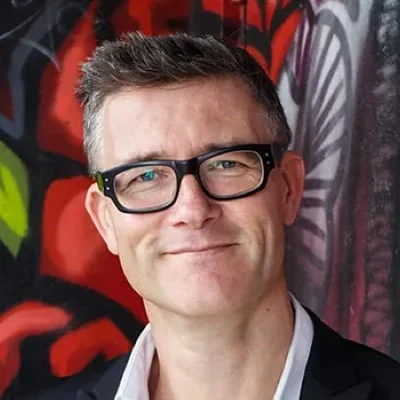
Building the connection between growers & brand partners
Margot Hannaford, Country Manager Australia and New Zealand, Icebreaker

Icebreaker's Margot Hannaford on the brand's plastic-free goal, natural fibre innovation, ZQRX and the long-term contracts that link growers to consumers.
Hi everyone, my name is Margot Hannaford and I'm the country manager for Icebreaker for New Zealand and Australia. Icebreaker is a VF brand. VF is an American corporation that owns a number of different outdoor companies; you might have heard of The North Face before, and they're one of the brands within the VF portfolio. I have been with Icebreaker for about nine years, and I recently took over responsibility for the Smartwool portfolio as well. Nicola, in her presentation, referred to the two brands that I look after as being key partners within the New Zealand Merino space.
So I'm here today to talk to you a little bit about our brand, and why it's important for us, and ultimately important for the consumer, to be able to tell the story of our whole supply chain, and why working with The New Zealand Merino Company is so important in that. For those of you who haven't heard of Icebreaker before, I'm very sorry, but don't worry, you'll know about us by the end of today. I'm going to share a discount code with you afterwards and we'll put it on the Facebook page, so you can go and purchase some of the amazing merchandise and apparel that we have after this as well.
How Icebreaker started
Icebreaker all started in 1994, so we're almost 30 years old. We were started by a gentleman by the name of Jeremy Moon, our founder, who's on the right-hand side if you're looking at the screen. Jeremy started the company after he was introduced to a Merino farmer (we refer to you as growers) who showed him a product that was basically a Merino wool t-shirt. Jeremy was a real outdoor enthusiast and was always out kayaking, hiking, skiing and doing lots of things. He was out in nature all of the time.
But he wasn't wearing nature when he was out there. So he met this farmer, Brian Brakenridge, and he put on this t-shirt that Brian gave him, and he could not believe the amazing quality and the properties that the Merino apparel had. It wasn't itchy or heavy like his grandmother's knitting that he used to put on when he was younger. He wore the t-shirt out doing the things that he loved, and unlike the synthetic outdoor apparel that he had been wearing previously, this wasn't made from plastic. It wasn't a man-made material.
It was soft, it didn't overheat, and it was odour resistant, so he could wear the same piece of apparel out on the trail day in, day out, hang it up to air, and put it on as fresh as a daisy the next day. He thought that was amazing, and so Icebreaker was born. Almost 30 years later we're now represented in about 38 countries around the world, and we produce around 5 million units of product every year, so it's a pretty sizeable business really. Everything that Jeremy stood for was behind this philosophy that nature has the answers.
Taking plastic out of performance apparel
So how can we be inspired by nature? Why would we introduce petrochemical synthetics into the environment when we have all of these fibres around us that exist already without us doing anything about it? We know all of the stories; the articles are almost daily in the newspapers now. The world produces more than 100 billion garments every single year, and the US throws away 11.3 million tons of textile waste each year. It's absolutely crazy. So what we're doing and what we're wearing really has an impact on the world.
This isn't about guilting you into doing the right thing. It's all about awareness and understanding. We've used the example before of plastic drink bottles. Maybe 30 years ago, when you had a plastic drink bottle with some fresh water in there, it was as natural as you could get, and we had runway models walking down holding Evian bottles because that was how fashionable and amazing it was. But now we all know the connotations that come with single-use plastic.
So we're trying to change the perception our consumers have of what they are actually putting on in their clothes. We see the t-shirt as being the newest unnatural thing around.
We lead a movement towards a more natural way of living by taking unnecessary plastic out of performance apparel. This is our purpose, and it guides everything that we do and what we believe in. Fibre for us isn't just a commodity; it's everything about who we are and the whole story. We've always been about offering a natural alternative to plastic apparel. I'll talk about the transparency reports that we do in a second, as I've got a slide on them, but in 2017 we started publishing information on our company.
In 2018 we decided to put our money where our mouth is and make the statement that we were going to be plastic free by 2023, because that's how much we believed in it. Since then we have changed a lot. We've gone from 84% of our total fibres being plastic free to now 96.3%. That's pretty good. We're obviously in 2023 and we're not at 100%, but that's okay, because it's about a journey, and the last 4% that we're missing is the really hard piece to solve. Think elastane in your running tights, for example.
So we're working with our innovation team, who do a lot of work trying to develop alternatives to synthetics, and we'll keep trying. Things like this haven't come easy for us; it's not as if we could just change things. We've had to innovate a lot. We had to drop almost our entire outerwear collection because of the plastic in it, and as soon as we decided not to sell that outerwear collection anymore, a category that was worth nine million US dollars to us was gone.
Overnight we just had to step away from it. Now we're back in it, and one of the pieces up there is our MerinoLoft, which I'll talk about in a second. That's a plastic-free piece of outerwear, which is pretty incredible. So it's forced us to innovate and to do the right thing.
Innovating with natural fibres
So how do we innovate? We've got six key innovations within the Icebreaker brand, and everything that we do builds on these innovations, so we can have a number of different products behind each innovation category. I've actually brought a piece of apparel from every single innovation category that we have, so you can see some examples of them. Obviously you've got 100% Merino, which is where we started. But 100% Merino is only good for certain things, and we know that sometimes Merino is too heavy to wear in the heat of summer.
So how can we make that better, and how can we do something different with it? We developed a product called Cool-Lite, which blends Tencel, made from eucalyptus tree pulp, with the Merino. It continues the natural fibre story to create a lighter product that breathes a little bit easier and feels even softer than Merino does on the skin. We have our zone technology, which really thinks about the zoning of the body and what you want your apparel and your garments to do.
I don't know how many people here do it, but when you're out doing an endurance event or trail running, you want some breathability under the armpits or down your spine. This is actually a zone piece that I've got on, and you won't be able to tell from there, but it's got finer panelling through the back here, which allows it to breathe. So if I've got a backpack on, the centre bit where your back is sweatiest is not the thickest construction. The thickest construction on this piece is actually through the chest, which keeps your chest really warm. So it's really thinking about what you need your products to do.
And it's about how we can mix and match the different techniques that we have. We also have RealFleece, which is 100% natural. It's 100% Merino on the outside, and the lining is a Tencel and Merino blend. We can create a few different-looking products with it; the high pile is the example shown up here, and I've got a piece up there, and we also have a softer, non-pilled version of it as well. MerinoLoft is our outerwear, and it's the first piece of outerwear we've developed that's 100% natural.
It has insulation through the entire piece, and that insulation is actually made out of Merino as well. Then Shell+ is the newest and probably the most exciting of all of this. Our Shell+ is the orange top up there and the pair of black pants. This is our biggest solution for giving people an outerwear product that is 100% natural. So we're taking those products and these ideas and challenging the synthetic industry around what is actually going into the products and how we're thinking about the overall fibres that are being used.
Transparency and the ZQRX program
The thing is, ultimately our consumers are demanding more. The consumer is becoming more aware of these things. They are feeling guilty about what they're doing, but they aren't just prepared to change; they need to know why. There's obviously a lot of conflicting information out there about the wool industry, and misinformation as well. So an important part of what we're doing is connecting the consumer with more of the truth, giving them the information to make their own decisions. I think that's the most important part of it. We're not activists in any way, shape or form.
I have synthetic apparel in my wardrobe just like anyone else would, and it has a place. It's about knowing when and where there's an alternative, and the longer-term impact of all of that. As I said, in 2017 we launched our first transparency report. The transparency reports are pretty heavy reading, although we try to make them as light as possible with lots of pictures and graphs. The idea of the transparency report was to open up the consumer's view into the world that we live in and what we're trying to do.
It wasn't just about what we were doing; it was also about what we're not doing. That's where things like plastic free by 2023 were born, because that's what we weren't doing. There are still a number of things in our supply chain that are not perfect. Our product still comes in plastic bags, and while the poly is recycled and we do all of these right things, we're always looking out there for alternatives and how we can make each step along the entire process better.
When we're talking about being a sustainable brand and thinking about the future, what's better than sustainable? That's where the regenerative piece comes in, and why we've been working with The New Zealand Merino Company over the last few years. We've worked with them for the last 27 years or whatever it is, but over the last few years it's been on the ZQRX program. Icebreaker, along with Smartwool and Allbirds, were the first brand partners with New Zealand Merino to launch ZQRX. We recognised that we need to stop just taking; we also need to give back, and the question is how we do that and how we support it.
The reason I have no voice is that I've spent the last week on the road with some of my team who are based in Switzerland, visiting a lot of New Zealand growers and continuing to build on our partnership, but also helping to support them in their local communities. The team were around Bendigo last week for the Sheep and Wool Show, and we held an event in conjunction with New Zealand Merino where we were giving back to the community and raising funds through an auction, because so much of it is about how we work with the people around us as well.
ZQRX is a mark of integrity for Merino growers. It shows that they're committed to ethical wool production, through animal welfare, caring for the environment and their social responsibility, and that is really important to us. If you jump onto our website you'll find a lot of information. We have grower profiles, and we tell the story of what the growers are doing and what they're trying to do, because we're trying to create that connection for the consumer back to where it came from.
With a lot of the brands you go out and buy clothing from, they wouldn't know where their raw materials are being sourced from. That's one of the strengths of our business: we know where we're getting our wool from, we know the quality and the controls that are going into it, and we can understand that full life cycle, which is really important to us. Here's an example of a certificate of authenticity from ZQRX, which is us being able to show that's what we've got.
I mentioned VF at the start. Almost 25 years after Jeremy had started Icebreaker, he realised that he needed the support of something bigger than what he'd built to take it to the next level. At that time Icebreaker was purchased by VF Corporation. VF's purpose is all about the betterment of people and the planet, and Icebreaker was the first purpose-led acquisition that VF had ever done. They didn't buy Icebreaker because of our product, though they loved our product. They didn't buy Icebreaker for the consumer base, even though we had a great consumer base. And they didn't buy Icebreaker for the connection to the growers that we had, because they already had Smartwool, who worked with New Zealand Merino.
They bought it because they understood the purpose of our brand and what we were trying to achieve. It can almost seem contradictory, because VF owns Icebreaker, and we're all about natural apparel and dedicated to providing it, but obviously The North Face is not. So how do those two things sit side by side? I think it's all about balance, it's all about choice, and it's about the combination of all of those things. We're not trying to be perfect at everything we do. It's giving people the opportunity to see something in a different way and to try things in a different way.
Long-term contracts with growers
Early on in the process we provided certainty to the growers we're working with through three-year supply contracts, and that was a key part of the partnership with New Zealand Merino. Later on we developed 10-year contracts with our growers. Ten years seems like a long time, and it is, but what we were really trying to do was invest in their future as well as invest in ours. We needed to guarantee the supply that we needed, and we also needed to create an environment where the growers we're working with are able to invest in the future.
We wanted them not just to think about getting the best price this year at auction, but about what they can do next year. We needed a long-term partnership to come in behind that, and that's where the 10-year contracts came from. We call the growers on the 10-year contracts our Long-Term Growers Club, and there are about 70 growers in it at the moment. All of those suppliers are ZQRX certified, which is really important. Part of setting it up was that we needed to know that with that 10-year investment, that 10-year guarantee of price you were getting from us, you weren't going to be affected by the fluctuations of the commodity market as it went up and down.
It meant you were able to invest and reinvest in your environment, in your team, and in the welfare and social responsibilities that you had. That's how we enabled the partners we're working with to do that. VF itself is a pretty big company. This is the 2023 fiscal year information: 11.6 billion US dollars in revenue globally, about 35,000 associates around the world, and around 360 million units of apparel, footwear and accessories produced. So there are some pretty big numbers in there, and you can see some of our sister brands that are in the portfolio with us as well.
America is definitely the biggest market from a VF perspective. From an Icebreaker perspective, Europe is our biggest market, but for Smartwool the US is the biggest market. So when you look at the portfolio of natural brands, which is Icebreaker and Smartwool, just over half of our revenue comes from the US. As I mentioned, I've just spent a week on the road connecting with growers in New Zealand, and we met with families from probably 80 to 100 stations as we went around the country.
The team also went across to Bendigo for the Sheep and Wool Show, though I didn't join them, and we're excited to build on our connection with NZM and our growers. As I said, our consumers are demanding quality performance apparel from us, and we're always out there challenging ourselves to do better. The only way that we can guarantee the quality of the product we're producing is by knowing every step of the process as it goes through, and that's why, as a brand, our partnership with NZM is so important to us.
Our purpose will continue to drive the way we develop and think about our actions. We're committed to working with what nature has provided in the first place, and we want to reduce our reliance on synthetic apparel going forward, so that we can all have a more natural and sustainable way of living. So thank you all.