Reframing how consumers see meat, wool and farmers
Howard Parry-Husbands, Pollinate
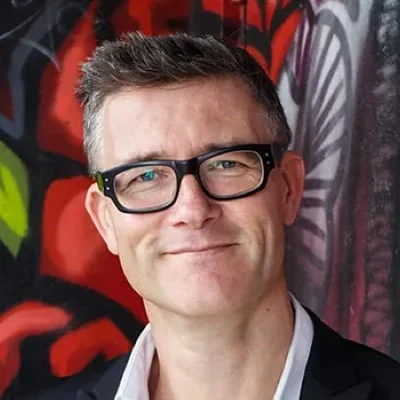
Why most of what farmers assume about public opinion is wrong, and how reframing values and guilt could help Australians feel good about buying wool.
Why farmers have the public wrong
Fabulous, thank you very much indeed. No pressure at all, is there? Thank you all very much, Dave, for having me here today. I just came here for the hat, to be honest. I've never actually spoken to a room full of people so passionate about sheep before, well, not to my knowledge.
A little bit about me, very briefly. This lady knows me from 30 years ago; we first met at university. Last night I turned up here at Mumblebone and these fabulous people said, "Oh, we've got your friend here who you haven't seen for 30 years, she's our neighbour." And I'm like, well, obviously I'm meant to be here, right? Clearly. Although Sarah's going, "What are you doing here?" Well, anyway, that's another thing.
A little bit of background on me, then. I went to university and studied climate change; geography was a lot of what I did. Then I left all that behind and went into branding and consumer behaviour, why people buy and sell stuff, so marketing really, and market research. Then I had a bit of an epiphany about 15 or 20 years ago. Some of my clients started to say things like, "Well, sustainability. People are really worried about stuff like animal welfare." And they started talking about things like climate change adaptation and the like.
Now bear in mind I'm working in market research, the advertising industry type of thing. Of course I'm nodding along going, "Yeah, that makes sense." They're talking about additionality and emissions trading and whatever, and I said, "Oh yeah, I get that." And my client says, "Do you actually understand what I'm talking about?" I said yeah. So I realised I was one of those few people that understood things like, not farming production systems, but larger ecological systems, and also consumers and why they buy or sell things, and public opinion.
So Pollinate is my company, and a lot of the work we've been doing for 15 years now for MLA is just tracking public opinions of red meat, or what people think of farmers. They like you. In fact, you're the third most trusted profession after doctors and nurses. Feeling good about yourselves? It's good, isn't it?
The amount of farmers I've spoken to. Last year I had the pleasure of speaking to five per cent of Tasmania's farmers. It's not hard, there's only 900 of them, so I spoke to 50 of them. I held a lot of gates open and had talks from tractors in the pouring rain. Anyway, the point is, when you talk to farmers a lot of them go, "Ah, the public doesn't like me." The rural–metro divide, all those things I'm sure you're familiar with.
And I can tell you right now it's mostly horseshit. We perpetuate these myths ourselves. So what I want to talk to you about today is reframing. For those of you who picked up on reframing, I don't do windows and doors. That's not a frame to me. A frame is how we see the world. So I've got a whole lot of charts here, I'm hoping these slides work, and I had to choose a specific topic, which is why vegetarians are becoming meat eaters. And we're going to talk about reframing.
I was asked a question, which was: what's the one thing you want people to walk away with today from what you're about to tell them? I want you to challenge your own assumptions. I want you to recognise, when you finish listening to me, that the truths we hold are not true. In fact, I want you to walk out of here really thinking, you know what, just because I think that's an absolute truth, it might not be.
I'll put it another way. My truth can be true and your truth can be true, and our truths might contradict each other, and yet they're still both true. If that doesn't bend your minds, let's get through this and you'll understand what I'm getting at.
First of all, more broadly, as an immigrant to Australia, I'd like to acknowledge Aboriginal and Torres Strait Islander peoples as the traditional custodians of country. I think we need to walk together, ladies and gentlemen, in the future. That's really why this chart is here, because we live in the solutions to yesterday's problems, and unless we come up with more collaborative solutions, our children will live in the solutions that we put in place.
That's Pollinate, that's us. We won the sustainability leaders award from the Financial Review last year, which was a lot of work and absolutely no value. We do lots of clients: federal government, state governments. There's MLA, for instance. Bega, lovely chaps, they do pretty well, they own everything in dairy now. Lots of brands up there. There's probably almost nothing we haven't done research on, so if you really want to have a laugh with me over lunch, go: yoga? Yes. Cheese? Yes. Posh bags? Yes. Anyway, who cares, let's get into this.
What is a vegetarian, anyway?
So what I want to do first of all is challenge some conventions. Vegetarians. I reckon everybody in this room has a good idea what a vegetarian is, am I right? Hands up if you need me to explain it. You get the idea.
All right, so what is a vegetarian? That's the amount of Australians who say they're vegetarian: seven per cent. Is anybody surprised by that? Higher, lower? That's the highest it's ever been in the 14 years we've been tracking it.
All right, here's a clue. I've never told MLA this yet, because the research presentation is next week, so if you promise not to tell them. Do you promise? Earnestly, please. Okay. That's last year's number. What do you reckon the new number of vegetarians is this year? Higher? Hands up. Lower? That's very meek, not sure. It's lower: it's five per cent.
So seven per cent of metropolitan Australians (we've got it for national as well) say they're vegetarian, and 46 per cent of them also eat meat. Which is weird, isn't it? I asked you earlier if you know what a vegetarian is. How many of you thought, what, they're people that eat meat? It doesn't make any sense, does it?
And the question, by the way, if you're interested, because with proper research you should always have the question at the bottom and a reference. You'll find when you read the newspapers, nearly always they'll quote numbers without referencing them, which means they might as well be making it up. So the question here, asked of a thousand Australians every year for the last 14 years, is: do you eat any of the following? We ask people, "Do you eat the following?" and they say, "I eat this, and I eat that." Then we say to them, "Are you a vegetarian?" and they say yes. And we don't say "liar", we just carry on.
So what's the true picture? Well, seven per cent of metropolitan Australians, which is most Australians. Just so we're clear, most Australians live in two cities, Sydney and Melbourne. Nearly all Australians live in three cities. The vast majority of Australians are metropolitan, and so are most people on the planet. As of last year, more people in the world live in cities than don't, for the first time in history. So that's what we've got to deal with. It's nice here, I like it here as well, but the fact is most people choose to live in cities.
Forty-six per cent of vegetarians also eat meat occasionally, so only four per cent would be what we might call a true vegetarian, or even a vegan. Hmm. Let's explore this idea of truth, shall we? Let's look at meaning, identity and the fluidity of identity. Because if you think about it, I've asked a simple question: are you a vegetarian? I know I'm picking on you, you're probably not, but you're just going to answer honestly. You're going to say yes or no, aren't you? People have told us honestly what they eat, and then they've told us whether they think they're vegetarian. We don't stop and go, "You liar, what's going on?" It's what's called framing.
Ugly babies and the blind men and the elephant
So let's play a game. Loosen those arms up. Hands up if you've ever seen an ugly baby. Has anybody ever seen an ugly baby? Come on. Yeah, they're real beasts, you just want to go, "Oh, Jesus." Hang on, keep your hands up, keep your hands up. Okay, and keep your hand up if it was your baby.
That's never happened before, and there's two of you. Geez. Okay, so that's literally reframing. Because if you think about it statistically, that was not possible. We've all seen an ugly baby, so we're either all lying, or, see what I mean? The point is, however ugly your particular baby is, it's a moot point. You love your baby. That's the point. So the difference is about perspective. It's all relative.
This is one of the most ancient parables known to humanity. It's about 4000 years old: the story of the blind men and the elephant. The parable comes from India, from Sanskrit times or whatever. There's a whole load of blind people, we'll try not to be gendered, and there's an elephant. The first blind person holds the trunk and says, "The elephant is a snake." The next blind person holds the leg and goes, "No, no, the elephant is like a tree trunk." Another one holds its stomach and says, "No, it's like a huge barrel." And another one holds its ear and says, "No, it's like a fan." You get the idea.
Now in the parable, the blind men then stand around and argue with each other when they can't agree, and the whole point is the elephant walks away. They never get to see the elephant.
The story here is that there's no such thing as a truth. None of those blind men were wrong. In fact, they were all correct, but they were also incorrect at the same time. It is only by accepting that my truth can be true and your truth can be true, even though our truths contradict, that we see the emergence, in this case, of the elephant. And that's a real challenge, because that's not how we think as humans. We think in absolutes. "I've held the elephant, it is clearly a snake." You fool, you were holding its trunk. But it's only when we accept there's no such thing as a truth, that there are multiple truths, that they can contradict and yet still be true at the same time.
What counts as meat?
If I only eat meat occasionally, am I mostly vegetarian? Meat Free Mondays? What about if I eat chicken? It's not really meat, is it? Fish, surely that's not meat. Oysters? I mean, an oyster is not an animal, let's be honest. It's as close to a vegetable as you can get, actually. Surely I'd be able to eat an oyster and still be vegetarian. What about milk? Does that make me vegetarian? Oh, vegans. Cheese. Oh my God, cheese.
So can you see how there's the simplicity of "I'm a vegetarian" and "there's a non-vegetarian", but from an individual perspective, if I only eat meat occasionally, does that make me an occasional fibber? And what is meat anyway?
Has anybody ever had an Impossible Burger? They're not called Impossible Burgers because they taste like tofu. It's called an Impossible Burger because it looks like a burger and it tastes like a burger. That's the whole point. So is it meat? It doesn't taste like plants. It looks like meat, it tastes like meat. Why isn't it meat? From a consumer perspective, when what I look at and what I eat tastes exactly like meat, why isn't it meat?
So we're into this interesting world. Don't forget as well that 55 per cent of Australian school children have never visited a farm. Never. Our relationship with food and food production is now a kind of by-proxy relationship. We don't see food produced. I've done lots of work for dairy, for instance, and you talk to people about skim milk and full-fat milk, and then you go to them, "So how do we make that?" And they go, "I don't know. What do you think, there's like skinny cows and fat cows?" See, they haven't got a clue. They have no idea how food is produced.
Most of us don't have any idea about most things. I have no clue how my car works. Don't even ask me about superannuation, no clue. Doctors? Don't care. I go along, I'm sick, they cure me, thank you. Do I really want to know about my metabolism? No. If we actually tried to understand the complexity of all these things, our brains aren't big enough, and I don't care. And most people actually don't care about food production either, until, that is, other issues get in our way.
Out of interest, only 50 per cent of school children could identify that that is a beetroot. The others were leeks, apparently. Leeks and beetroots need a bit of a makeover. So that's my point: we don't recognise food or what food actually is.
So what is meat, if meat can be grown in a petri dish in a laboratory? Familiarity with food production is so low. Does it actually matter that meat comes from an actual animal, a sentient creature, or that it's grown in a petri dish, because it tastes like an Impossible Burger anyway, which tastes like meat? Can you start to see here why the consumer doesn't so easily categorise themselves as a vegetarian or not?
Of interest, we did research for MLA and we asked, would you eat lab-grown meat? About 40 per cent of Australians said yeah, which was really surprising. We were like, what? Do you know what I mean? We have an assumption: why would you want to eat lab-grown meat when you can eat a normal animal? And actually a huge amount of Australians are like, "I'd give it a go."
If you go to the supermarket, it's actually not easy to tell the difference either. One of these is not real meat, and the less attractive-looking one over here is actually from an animal. I don't know about you, but if I wasn't really looking, I was in a hurry and I was buying the groceries, I'd have picked up the one on the left. I wouldn't think that I'd accidentally bought tofu, would you?
We did this research in New Zealand as well, for my New Zealand colleagues who are here today, and most Australians have unwittingly bought a plant-based protein equivalent of meat by mistake. And interestingly, there's no ethical dilemma in that. If it was the other way around there is: if you're a vegan and you accidentally bought a beef burger, you'd probably be a bit miffed. Anyway, we'll leave that there.
So in summary, being a meat eater or being a vegetarian means different things to different people, and different things to different people at different times. It's what we call multivalent. It means different things from different perspectives at different times. It's actually not as simple as where we started off.
Values and morality
So what does all this mean? Well, we really need to dive even deeper. We need to look at our society, we need to get into culture. We need to understand why people choose to become vegetarians.
This is actually a real quote from some work we were doing for Domino's Pizza. We had a vegan guy in the room and he actually said, "Look, there's a hundred reasons why you might become a vegan, but you only need one. But once you become a vegan, you stack the other 99 on top." There's actually a joke, you can Google this, a comedian who says, "How do you know someone's a vegan? Because they tell you."
The point is, look at what you're doing: you're saving the animals, water, you're ending world hunger, world compassion, world peace, the rainforest, the planet, wildlife. Oh, where would we be without vegans? But you can start to see what's going on here with morality. If I choose to become a vegan, what I'm actually saying is, "I have made a moral decision to live my life more righteously and save the planet." So vegans themselves are guilty of framing non-vegans as the bad people, or whatever.
This is from a really brilliant guy called Schwartz. He went around and spoke to about 62,000 people on the planet, which is a lot of interviews. I've done about 10,000 interviews in my life, so he was busier than me. What he found out was that everybody on the planet has the same values. They're called universal human values, and there's only 10 of them: security, tradition, conformity, benevolence, universalism, self-direction, stimulation, hedonism, achievement and power. These 10 values determine everything that you do. Nobody in this room, for instance, does anything at all unless it aligns with their values. And you can evoke different values. They're all universal truths.
So you might think that you're rich because you earn a million dollars a year. "Look at me, I earn a million dollars a year." And then you find that everybody else earns three million dollars, and you go, hmm.
So these are called external values. You need an external other to evoke these values. I feel safe. Why? Because I'm not threatened. Do you feel safe? Otherwise, from what? So these are external values, and these are intrinsic values. "I firmly believe that a man or woman is entitled to the same pay for doing the same job. I hold that equality as a self-evident human truth." I don't need an other for that. That's a morality. Our morals, our ethical systems, are based on intrinsic values, which are a lot of these ones over here.
These are individual values: self-indulgence, hedonism, daring, independence. That's about the me, the individual. And these are collective values, the we, like honouring of elders, a spiritual life and true friendship. That's it. If you want to understand human nature, it's super easy.
You can evoke different values, which is what politicians do. Generally, down here is the conservative or risk-averse end: tradition, security, conformity. This is a fear of, or uncomfortableness with, change. You can evoke these values by saying "China". See? Instantly. And up here you can evoke these values by talking about freedom. Freedom from what, or freedom to? So each of these values can be evoked in different ways. I could also make you feel really good about China by saying "massive amounts of market opportunity".
So can you see that the same thing can evoke different responses depending on how you frame it? What's happening here is that people are making choices about their food, or their fibre, based on deeper issues like morality. When things like climate change become a really big deal, or animal welfare becomes a really big deal, then all of a sudden, if wool production is tied up with issues I'm really worried about, like animal welfare, I might choose to have, say, nylon instead. Or my friend over here is going, "But that's made from petrochemicals, that's really bad for the planet." And eventually we all end up running around naked. Probably not, but you get the idea. Nothing is actually perfect.
Guilt fatigue
Australians aren't blaming dairy farmers for their farming practices. This is from work for Dairy Australia, to do with bobby calves. Australians just want to buy guilt-free milk. We did research with Australians on bobby calves, and the truth is most Australians haven't got a clue about bobby calves. So when you tell them, you don't get righteous indignation. You don't get the Australian consumer going, "That's it, I'm not buying milk ever again, I'm moving to soy milk or almond milk." They don't do that. What they do when you tell them about bobby calves is go, "Oh, for God's sake. Can I not eat anything? You mean I can't eat cheese now?"
Guilt fatigue. People are fully over being told, "That's bad for you, and so is that, and that's bad for you as well, and you shouldn't have too much bacon." Bacon! See what I mean? They just want to not feel guilty about what they're buying.
Thirty-eight per cent of Australians (this research is from March) feel guilty about their unsustainable lifestyles. That's about four in ten, two in five. So that's a fair dose of guilt. And guilt also implies fault. I feel guilty because I did something bad, right? Like buying food, buying clothes. So you can see that we've woven guilt intrinsically into our lifestyle. You can't live without buying food or clothes, but now I've got this trade-off: was it ethically made? Where's this fibre from?
So guilt is a burden, and you can't educate consumers out of guilt. The emotional will always top the rational. All the science and the evidence in the world matters not one iota if someone is feeling guilty, anxious and upset. So emotions always win.
How values and knowledge change the rules
This is work from CSIRO that looks at the decisions available to us. Fundamentally, the only reason that things change in terms of the choices available to us as a society is that there's some overlap between the values we hold, what is important to us (animal welfare, or wealth and prosperity, or freedom and individuality, or conformity and tradition, those are values), and knowledge systems. What do we know about this? Do I know that there's a thing called mulesing? No. What's that, then? Oh, this is going to get icky. Now I know about that, and my values are that we should treat all animals in a nice way, and all of a sudden I would like the rules changed, please.
Welcome to the world of NGOs, non-government organisations. That's what they do. They go, right, where are society's values at? Do they like this behaviour? No. Is this behaviour known? This behaviour is not known. So should we make it known, make it part of the public discourse? Politicians then start to go, "Oh, there's a whole lot of people writing me letters," and then they change the laws.
The Great Koala National Park. There are shitloads of koalas already in all those forests, and there's just as many koalas in the national parks around the corner. Just as many koalas died in the national parks as died in the state forests. Turning it into the Great Koala National Park will not save a single koala. They burn just as well in state forests as they do in national parks, trust me. But the science doesn't matter. It's an inconvenient truth that gets in the way.
What the world's red meat data showed
So MLA sent us to Chicago, which was terribly heaps of fun, and we had an opportunity to share the Australian meat and livestock data, which is Australians' attitudes to red meat and beef, with the whole world, which is kind of cool. We had all these people, Brazilians and Argentines and Colombians and Zimbabweans and people from all around the world. The idea was: could we come up with a global narrative for sustainable beef? Because you might have noticed red meat's a bit on the nose as well, apparently. Beef and lamb are killing the planet, and it's terribly bad, and you get the idea. I refer you back to milk, which was also killing the planet, or whatever.
So we did all this work and we got the whole world to share its data. Now, the world doesn't share very well, because it's a market-based economy. Capitalism won; we're just going to have to get on with that. That means Australia competes with everybody else for red meat, and so do the Americans and the Canadians. So to get the whole world to share its data was actually quite a thing.
Pollinate was tasked with taking the whole world's red meat data and saying, right, is there some commonality between what the Germans think of beef and what the French and the Chinese think of beef? We spent two months doing all the analysis, and 48 hours before I presented to 140 people for two days in Chicago, there was no commonality whatsoever in the data. So I was in a little bit of trouble. It wasn't looking good.
We presented all these scorecards here, and my colleague, who's just awesome, goes, "Nah, there's nothing in it." I've done two months of research and the data's all over the show. The Germans asked the question differently to the Chinese. The French don't ask the question at all; of course they don't. And I'm getting on a plane in like six hours and this is going to be really embarrassing. What are we going to do? And she went, "I did notice one thing. However they've asked the questions, whatever the data looks like, there's always the same top two responses." I said, "You're a genius," and promoted her.
People who said they're reducing the amount of beef they eat gave two reasons, pretty much everywhere in the world. One was cost: beef is expensive, and I save money by eating less of it. The other one was health: eating less meat makes me healthier. So I've reduced the amount of red meat I eat as a result of health and cost.
I'll put it this way. This is what we call a reinforcing loop in systems thinking: being healthy pays back, and it pays to be healthy. Meat Free Mondays. Potatoes are so much cheaper than steak. I should have jacket potatoes tonight with cheese and beans. Awesome, what's not to like, right? Fellow British person, there we go. And one-seventh of my meals are now meat free. Oh well, I'm vegetarian on Mondays. See how my stats went up? But I'm feeling good about this because I've saved money and I feel healthier, because everybody's telling me that we eat too much red meat.
People who'd stopped eating meat altogether, the rejecters, stated morality as the top reason. They said, well, ethically it's unacceptable to eat meat, and beef farming is bad for the environment, so I'm going to save the planet by saving the animals. They've stacked all their moral arguments up: that's why I no longer eat red meat. Pretty much everywhere in the world. And that was really interesting.
Well, that's good, but Pollinate isn't a research company that stops at the data. We try and understand why. So this is Elinor Ostrom's work. Elinor Ostrom is the only woman ever to have won a Nobel Prize in economics. A bit of a top bird; love Elinor. She said that you can look at the entire world as what you call a complex socio-ecological system. There are people, and we used her model to make sense of this. There's beef farms, they produce beef, and there's food production systems, abattoirs, and then there's retail systems, Coles and Woolworths, and then there's consumers, and they all interact like that. Down here is the ecosystem to support it: the land, grass, water. And up there are the socio-economic and political settings: politicians squabbling, laws and regulations. That's it, that's the whole world. It gets a bit more complicated, but now's not the time.
She said if you understand those interactions, you can actually start to understand how to change the system, or more importantly how the system is influencing us to change, or more importantly, if we don't change, how we're going to get left behind.
Interestingly, if you just map health and cost, the first one, why do I reduce my meat consumption? It's the interaction between consumers and the retail system: cost and health. They don't care about production. If you look at morality down there, however, the reason I reject eating red meat is an interaction between beef farming processes and the wider ecological system. It's a morality issue. And those two overlap, which is what my Domino's guy said without ever having referenced Ostrom, when he said you only need one reason to become a vegetarian, but you stack the other 99 on top.
So the evidence from the whole world suggests that people are increasingly saying it pays to be healthy, and save the animals, save the planet. There's all these reasons why I need to reduce my red meat consumption. At that point I had a whole room full of farmers in Chicago going, "We hate you, Howard."
But the truth is it's still only seven per cent, isn't it? Or five now. So what's going on? What's the paradox? Have you been a vegetarian in the past? Half of vegetarians eat meat, right? But 20 per cent of meat eaters have been vegetarians. I mean, what's going on? We're having an identity crisis in Australia.
What we found out is that what makes vegetarians or vegans switch back to eating meat is health. So I'm likely to stop eating meat because I want to try a vegetarian diet, animal welfare concerns, health, whatever. And I started eating meat again because I was craving meat (I love that one), it was only a temporary challenge, or I had health problems.
So what we find is that people think, right, it's a health thing, I'll stop eating meat. And then six months later they're like, "I just really want a steak, I'm not feeling great," my iron levels, whatever it might be. So there's actually a fluidity here. Our identity is not as fixed as we like to think.
So there's Ostrom again. There's actually a feedback loop: it pays to be healthy, and save the animals, save the planet, unless this makes you unhealthy, and then it's totally okay to eat meat again. That's actually what's going on in the real world. If any of you have got teenage daughters, you know where I'm going here. They go, "I can't possibly," and then you find them sneaking away. My daughter's like, "No, Dad, I'm not having carbs," and then in the corner, out of sight, I find half-eaten muesli bars and I'm like, "Oh, we have mice."
There are only shades of grey
So the vibe here, ladies and gentlemen, is that you and I and all of us need to reframe our thinking. We need to accept that all the things we've been taught since primary school, in this wonderful world we live in of Western Judeo-Christian constructs of good and bad and truth and deceit, are horseshit. There's no such thing as black and white. There are only shades of grey. We like to think that certainty is a good thing. It is not.
We need to recognise that consumers want to do the right thing. It's not about farmers doing the wrong thing. The whole idea of right and wrong, that comfortable simplicity of, like Tony Abbott speaking, "There are good guys and there are bad guys." What an idiot. There's no such thing. It's not the way the world is. Yes, of course there are bad people out there, but mostly there are good people doing bad things occasionally. And actually, you know what, bad people can do good things. Sorry, awkward, but that's the way it is.
And the consumer just wants to do the right thing, and it is literally impossible for them to choose. So I challenge any of you: go to the supermarket tomorrow, choose any category, and say, right, I'm going to choose the right product here. We're going to choose the ecological one, the offset one, the Marine Stewardship Council one, the Planet Ark one, the animal welfare one, the organic one. Which one's better? Depends on your value system, doesn't it? Depends on what you hold as self-evident and most important.
Well, frankly, right now, in these times of economic hardship, it's just: can you put all that aside, what can I afford? Is that the wrong thing? No, of course it's not. At the same time, Australians just want to not feel guilty about their consumption. It's not hard, is it? "I'd like to buy food, I'd like to eat, and can you stop making me feel bad about the fact I bought Tim Tams?" Because everybody needs Tim Tams.
And furthermore, they've got guilt fatigue. Australians are sick and tired of feeling guilty about the food system, which is why they don't hate farmers. They genuinely have an extraordinary amount of respect and high regard. We've come across very, very few Australians who have a problem with farmers or farming as such.
I've never met a farmer yet who said, "Oh yeah, there are bad farmers." It's like a collegiate group, isn't it, you guys? "There's no such thing as a bad farmer, we're all good." And then I have a chat after a long time and I find out that Bob down the road is really struggling. His herd is eating the paint off the walls, it's a shame, it's really skinny. And I go, "All right, but the beef's still good, right?" "Oh yeah, best beef in the world. Australian beef, including Bob's herd."
There's a traditional, conservative mindset running through farming communities the world over, you'll be pleased to know, not just Australia, which, if you remember, is correlated with a difficulty with change.
So what I want to leave you with, the last thought, is: what actually is a reframe, in simple terms? A reframe enables us as people to be open-minded to the need to change, the need to adapt. Adapt is a better word than change. We've been adapting for a terrifically long time as a species. We're all wearing clothes, for instance. Adaptation is what we do to survive. If we fail to adapt, I guarantee you we won't be here. Dinosaurs, case in point. We're actually a terrifically adaptable species. We should be good at this.
What we need to do is help ourselves see the world differently. If you are stuck on a desert island, you will be delighted when you see a boat. If you've been stranded in a boat at sea for a very long time, you'll be delighted when you see a desert island. It's a lovely little paradox, isn't it? Each of these particular people, in their particular situation, is delighted with the other person's nightmare. If they collaborate, they can probably work it out.
Reframing the wool debate
But anyway, the challenge I've got for you as a room, because I think I'm on time, aren't I? Forty minutes, five minutes, yeah. Questions as well, you lucky things. The challenge for you is: how do we solve the wool issue? I've called it the sustainability and animal welfare issue. And that is, I personally think, a stupid way to look at it. You need to reframe this. You need to not try and solve the wool sustainability and animal welfare issue, because you won't be able to.
What you can do is ask: how can you allow Australians to stop feeling guilty, or even feel good, about buying wool? Because if they feel good about buying wool, they'll buy wool. But if they feel guilty about buying wool, then they'll find reasons to buy nylon or whatever instead.
So stop fighting people who have problems with any aspects of wool production, because there's no point. The very act of fighting them will empower them. What you need to do is lean in and recognise that people who are terribly worried about animal welfare or climate change are actually just fearful or scared, or they think it's immoral. So you're not going to be able to argue with them. What you need to do is understand where they're coming from, and recognise that there are probably other things we can do that would make them go, hmm, okay.
With that dairy industry example I talked about earlier, with bobby calves, we got a whole lot of people in a room, about the same number of people as here, and every second person was a vegan or animal welfare activist, and every other person was a cheese-loving dairy lover. They didn't know this until they sat down. You could tell, because one half were really skinny.
Now, before we did the research we got them all to write either a love letter or a break-up letter to dairy. You can see where this is going. Obviously the dairy lovers wrote things like, "No meal is a meal without cheese. I love your greasy goodness sliding down my hands as I eat my delicious barbecued burger," whatever. And the vegans wrote things like, "The dairy industry will be consigned to the depths of hell where your cruelty belongs."
So we started our four-hour research session by making each person read out their letter, and we'd sat them one or the other, and it was really awkward. About 30 minutes in, the last guy, a skinny little thin pasty guy, was shaking like this as he read his letter out. And then it was just weird, because everybody went, hmm. "So you don't eat a lot of cheese, then?"
Then we said, right, let's talk about bobby calves. Throw that hand grenade in. Of course all the vegans went off, and all the cheese lovers went, "Well, that's a bit..." Then we said, all right, what would you like to do? What do you reckon we could do? And we talked about what you could do with bobby calves, and options, and so on.
Then we had lunch together, which was quite easy: there was vegan food and non-vegan food. But by the time the four hours were over, everybody was chatting away, and we got to the point at the end where the vegans were saying to the dairy lovers, "If you could get rid of bobby calves, then it's not cruel, is it? You might like cheese, I don't, I wouldn't eat it, but I don't have a problem with you eating cheese if it's cruelty-free cheese. That'd be cool." And the cheese lovers were like, "Well, now I know this, I'd be much happier if it wasn't there, and then I can carry on eating cheese."
So we need to celebrate and allow people to enjoy what they do, the joy of food. I went skiing last week, and I had to take all of the woollen clothing out of the tumble dryer because my family just shoved it all in. I'm like, "No, no, no, it'll all shrink." But it was all wool. Everything we wore was wool, of course it was, because it's the best bloody stuff to wear when you're skiing, right? But look at that: straight away my family's just gone straight to the tumble dryer. They're just not used to the fact that wool will shrink if you chuck it in the tumble dryer.
What a Google search says about wool
The point I'm getting at is that we need to allow people to enjoy their choices and not feel guilty about them, and not fight people who think that we're somehow bad.
I thought I'd do a little bit of homework. This is my last chart. On the left-hand side is how Woolmark talks about mulesing. They actually managed to talk all about it without actually mentioning mulesing, which is genius. This is not the whole website, there's lots more, but this is their front page.
If you Google, I think I put in "animal welfare wool", here are the top three results. No consumer looks beyond the first ten Google results. We work for Google, so trust me: if it's not on the front page, it doesn't exist. There were a million hits, and the top three were PETA, Woolmark and some eco label thing. Completely different ways of looking at the industry.
Woolmark talks about the five welfare domains, and Australian woolgrowers. You guys are ensuring sheep are cared for in a way that maximises their welfare, but you're constantly looking for improvements. There's a specific debilitating condition, flystrike, and you've been proactive. You're collaborating with research and you're protecting sheep against this condition, and to date you've invested 41.6 million dollars to combat flystrike. There's your wellbeing of sheep, day in, day out, and you're passionate about knowledge gained from generations of living and working with nature. Ah, you guys. Flystrike.
Meanwhile, according to People for the Ethical Treatment of Animals, you've been breeding and "genetic mutilation". By the way, I Googled "genetic mutilation". It doesn't exist as a phrase. It doesn't actually mean anything. It doesn't make sense that someone's mutilated my genes.
You've raised sheep, by the way, to produce excessive amounts of wool, and shearers are paid by volume. There's a quote all about sheep having their faces sheared off and stuff. And then, mainly, they're forced to endure a gruesome procedure called mulesing, highlighted with a link to hideous pictures, with huge chunks of skin and flesh cut from the animal's backside without painkillers, supposedly to prevent a condition called flystrike. Other humane methods exist.
That is the same Google search. That is your reframe, right there. So what will happen, if mulesing or flystrike become a big thing, is people will go and do a Google search, but they'll read that one first. That's the top one. Most people don't bother with the second. The third one's actually quite balanced, the eco one. It just talks about buying nylon instead, and I'm like, for God's sake. A third frame.
So what I want to leave you with today is recognising that neither of these is wrong. This one is designed to evoke a sense of disgust, or anger, or fear, or morality, whatever it might be. It's full of and laden with words that are really evocative, like "gruesome" and "mutilation", and that is designed to have one single response. It ends with "Save a sheep, don't buy wool." And I'm like, how's that going to save a sheep? It's ridiculous. But you could do exactly the same search for forestry, for red meat, for fish, for just about everything, and you'd end up having nothing to eat. You'd have to survive on air, which I'm sure is polluted.
So what I want you to do, as I finish here, and I'll leave you with a thank you note, there we go, is think today about recognising that we need to reframe public opinions. Part of that is recognising we also need to adapt our practices, and as an industry come together and work on really driving the positive public perceptions that we need for the sector.
There we go. So for those of you with ugly babies, I'm sorry. For the rest of you, that's all fine. It's been delightful. Thank you all very much indeed, thanks for having me.


