Managing Ground Cover
Chad Taylor, Mumblebone
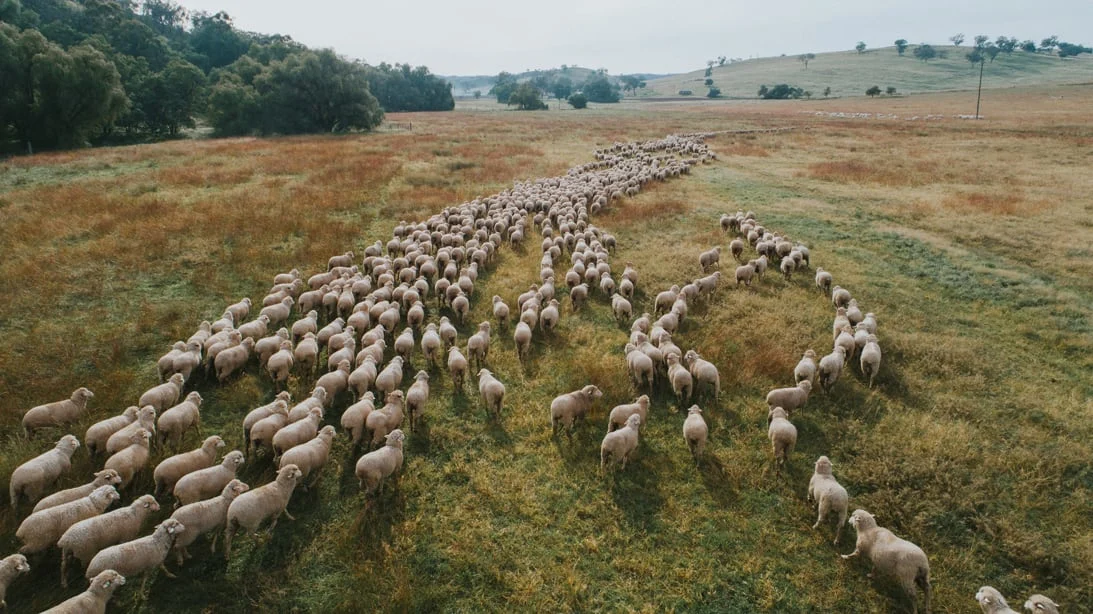
Chad Taylor walks a native paddock after the drought, showing perennial grasses returning and how rotational grazing builds root mass in the soil.
Interviewer: Chad, I've got to say, I've always admired the way you manage your place, and the way your father has. I've never seen worse than the drought; it was terrible. But take us through a bit of how you've recovered.
Chad Taylor: It's been a spectacular recovery, really. The way the rain fell and the timing of the rain couldn't have been any better, so it's been quite a surprise to us to see what's coming back. There was some cover on the country, but it was dry for a long time, so it got quite bare in places. Usually when the country gets so bare, that encourages a lot of broadleaf, thistle and rubbish, which is a bit of a challenge to manage post-drought. But a lot of the recovery has come in the form of perennial grasses, which is wonderful to see.
We'll just take a bit of a walk through this. This is red grass. It's not a particularly exciting grass by any stretch. This is something different; I'm not really sure what that one is. There's a whole bunch of other ones: some sort of umbrella grass or love grass, and black grass.
This is one of the winter perennials. I'm pretty sure that's white top. Once it's out in seed, we'll get a better idea. Someone else may tell me I'm wrong, but that's what it looks like to me.
Interviewer: How important is this massive amount of biodiversity you've got, even in this paddock? And this is a native paddock?
Chad Taylor: It is a native paddock here. It's never been touched, apart from being grazed. Biodiversity in any form is providing benefit in the form of root mass into the soil. So we want to keep feeding the soil root mass, and encourage that root mass into the soil through a rotational grazing system. Keep in mind that every time we graze a plant down, we're aiming to take 60% of the leaf matter, and we're dropping an equivalent mass of roots into the soil.
That root mass, continually dropped into the soil and encouraged through the grazing system, is how we aim to feed the soil. Through feeding the soil, we're grazing towards the perennial state that we want the country to move into, and away from the annual state. So we're targeting species like this white top we just looked at, and grazing to suit that species, to encourage it to proliferate.


