Early Maturity
Chad Taylor, Mumblebone

Chad Taylor explains why Merino lambs needn't be slow growing, and how selecting for post-weaning weight gets wethers sold and ewe lambs joined early.
Interviewer: Chad, why are Merino lambs so slow to grow?
Chad Taylor: They're not. If we complicate the growth pattern with all sorts of other traits that are antagonistic with growth, then yes, of course we end up with low growth. But if we select for high growth, then we can breed high growth. What we're selecting for here is high post-weaning weight, to have early growth, to have our wether lambs up and sold early, and our ewe lambs up and joined early. A lot of that is a function of growth, amongst a few other traits, but growth is central to those production gains. So that's one of the reasons we select for post-weaning weight in our mix.
Interviewer: What's the benefit to your customers?
Chad Taylor: Well, there are benefits in terms of genetic gain and profitability. The sooner we get our wether lambs up to weight and sold, the higher the profitability and the lower the input costs to achieve that outcome. So we need them growing quickly to be sold early.
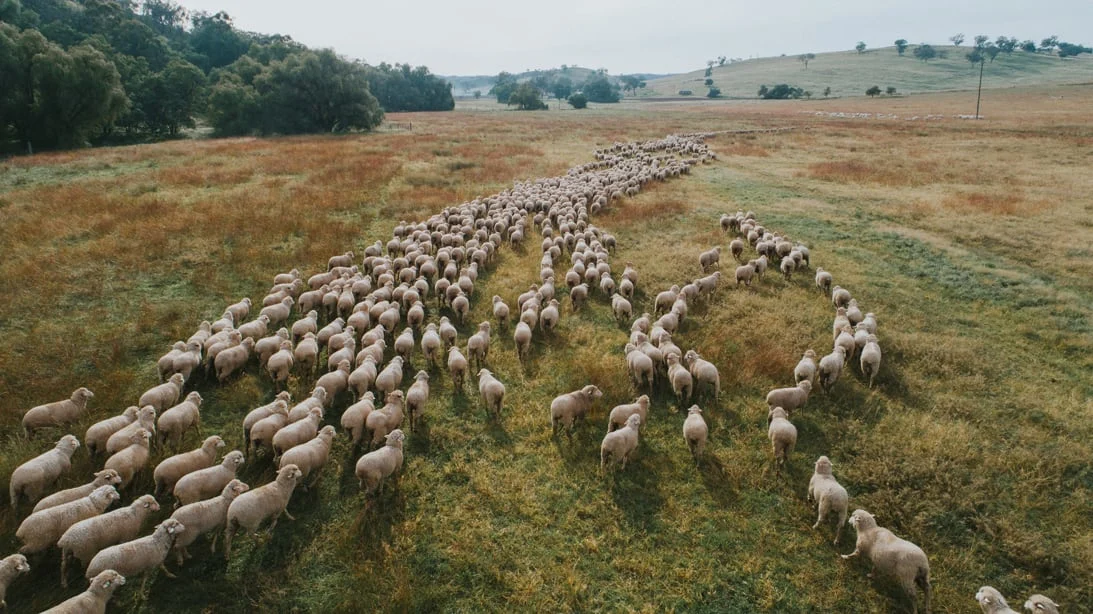
Then on the ewe lamb front, the sooner they reach joining weight, the sooner they can be joined and get back into the genetic gain system. These ewes behind us are nine months old, and they were joined at seven months. We're standing by for scanning results, but we're quite optimistic there'll be some pretty exciting results coming out of these young girls.